Solving Problems
To make a more accurate trajectory calculation of a rocket we need to specify the thrust of the rocket and the mass of the rocket more precisely.
By fiddling around with a polynomial i got this:
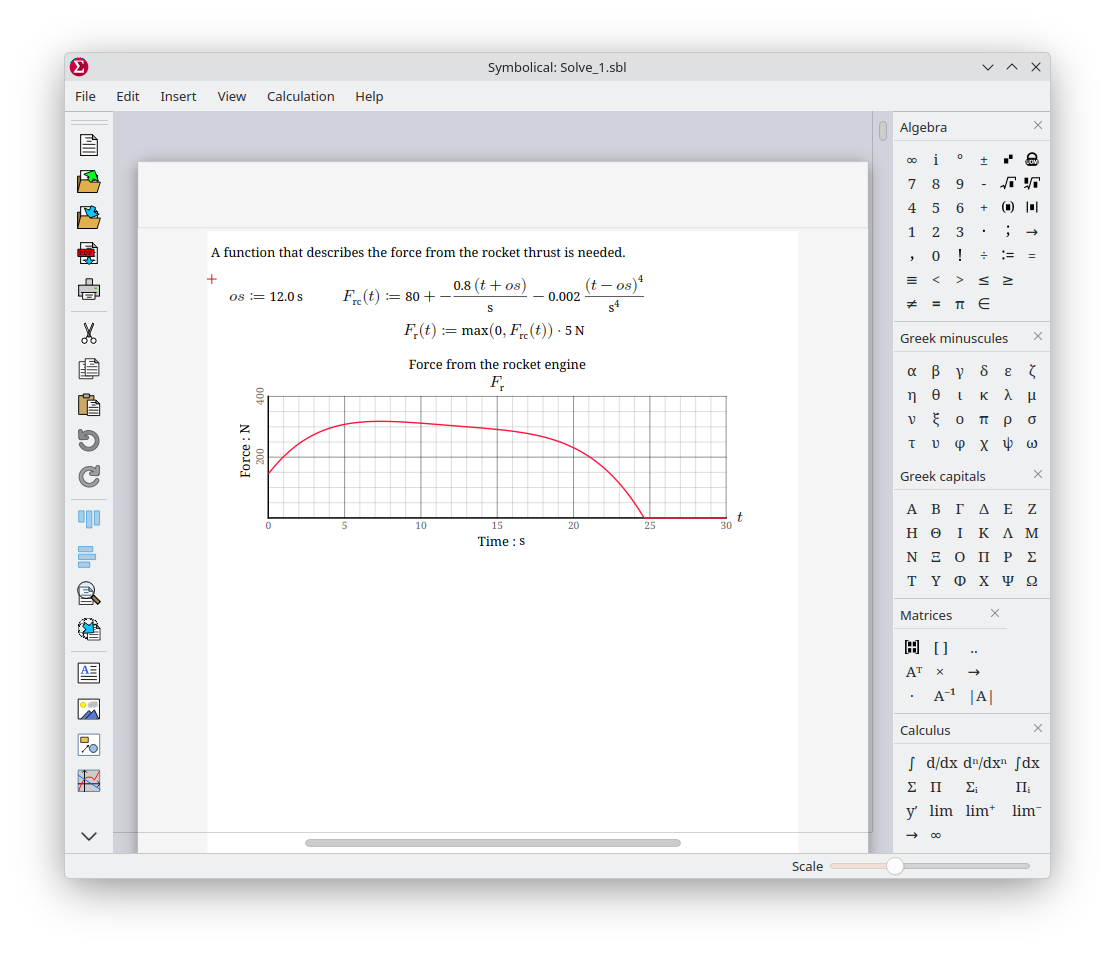
The thrust ramps up and then after about 25s its completely attenuated.
Now we need a function that describes the mass of the rocket over time.
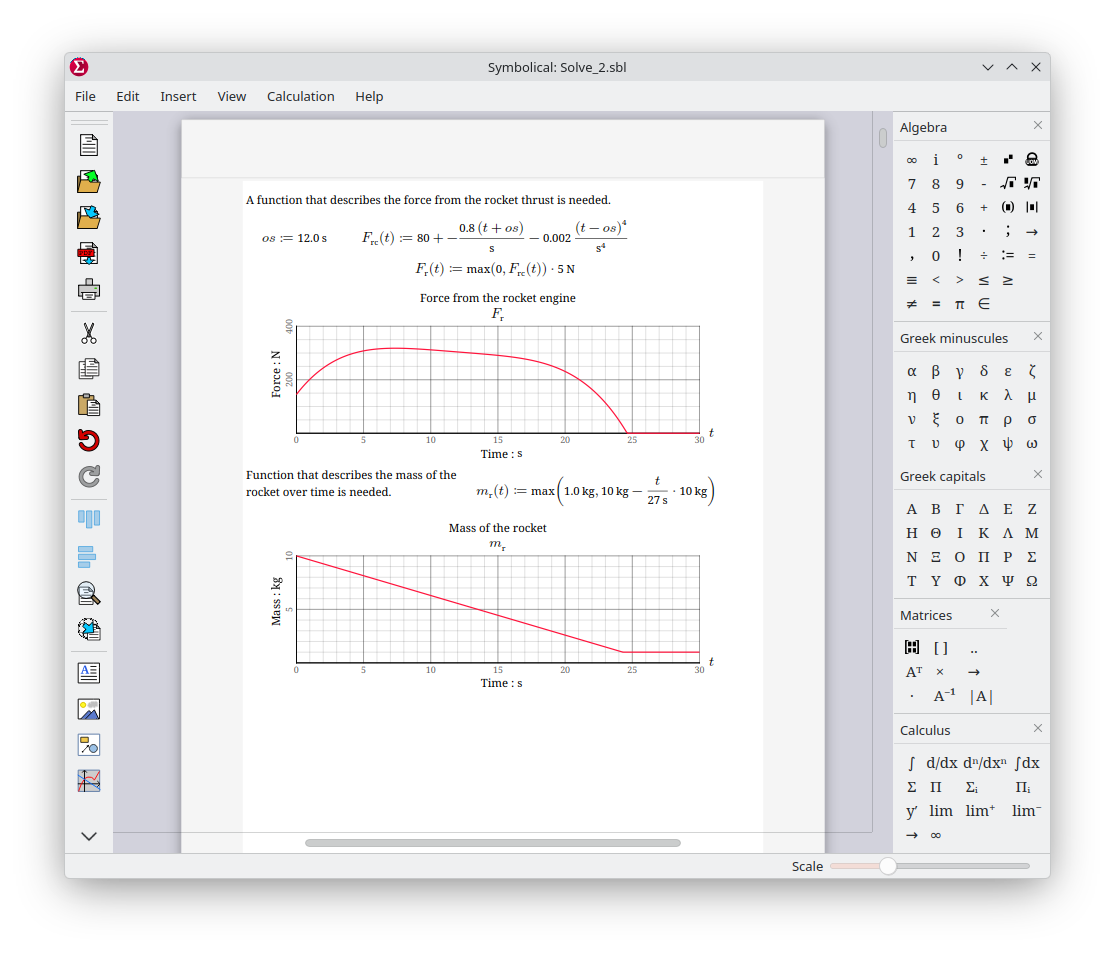
This is a hobby rocket and its total initial mass is 10kg. This mass just linearly attenuates to 1 kg over the same timespan.
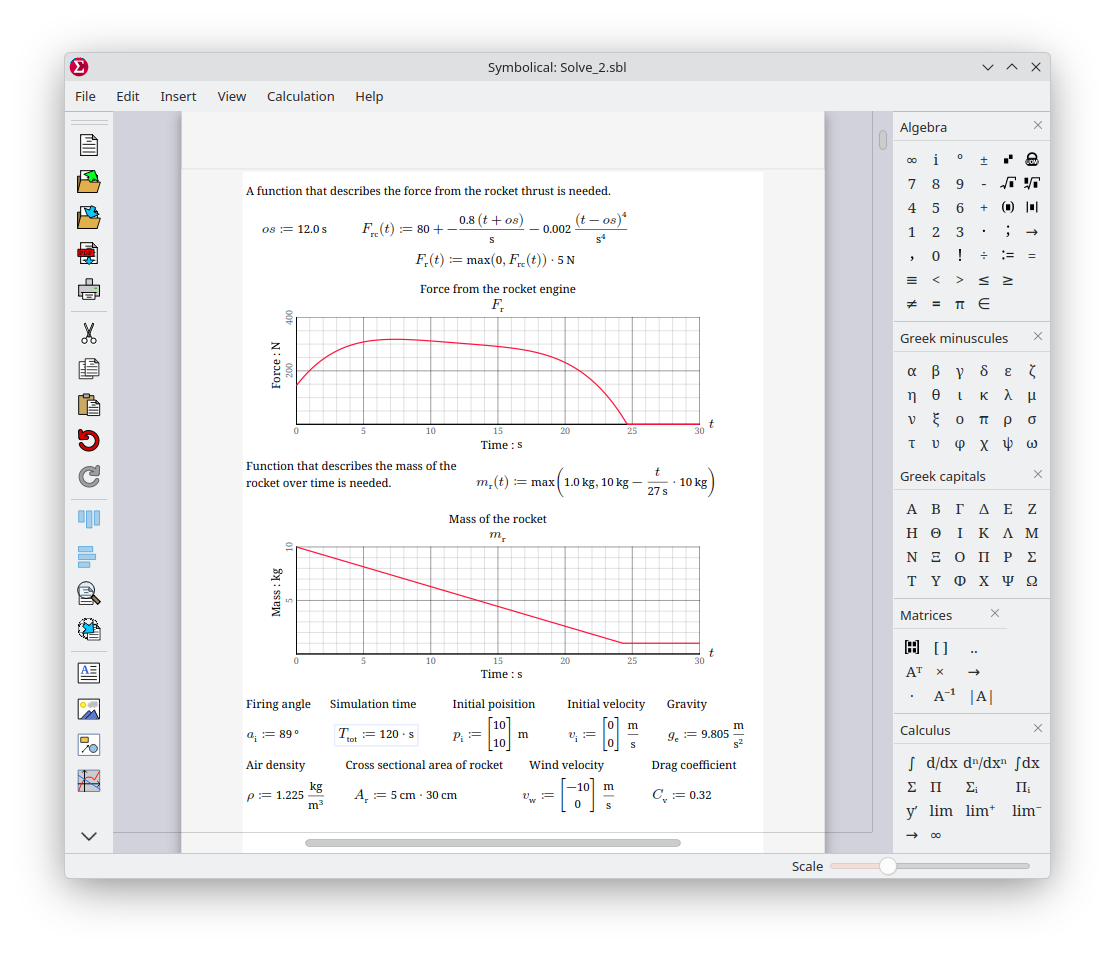
Now we can setup the other initial conditions for our rocket:
To solve this problem we need to insert a solve block. This can be done by clicking the insert solve block icon in the left toolbar.
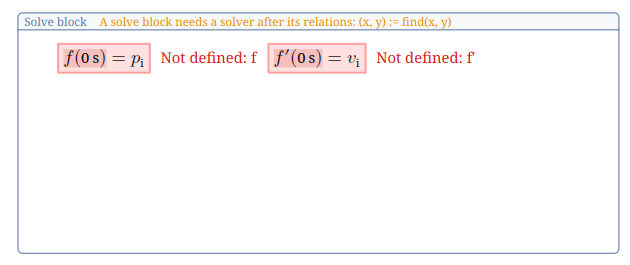
Add the first conditions for the solver, be sure to use the comparison equals expression (Ctrl+=), and not the evaluate equals expression (=). This can also be added by clicking on the icon in the right side with the “fat” equals sign.
Now lets add the force from the rocket thruster and gravity, and set the definition of the f function to the odesolve function:
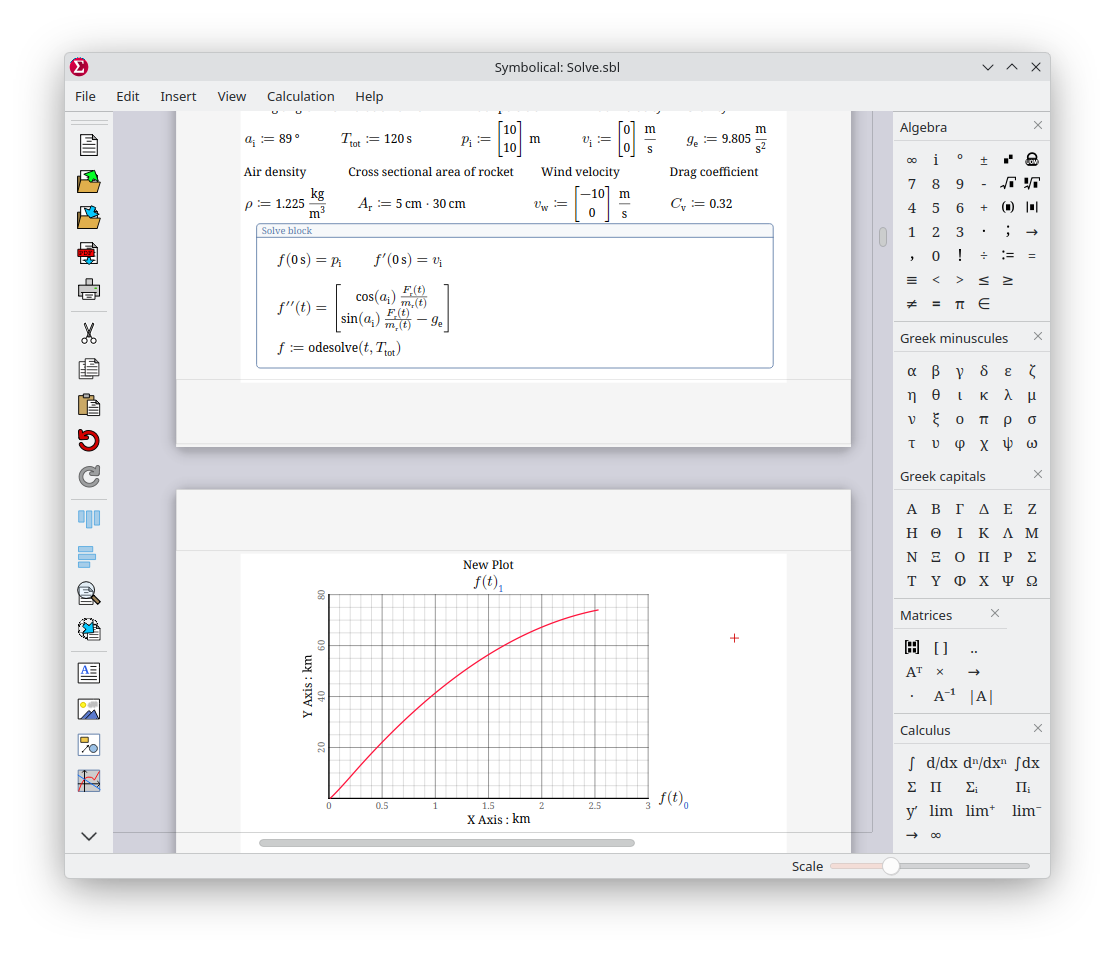
Without the wind resistance the rocket almost gets into orbit. We need to add a force from the air using this formula:
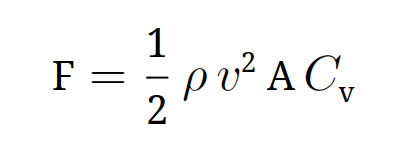
By using the velocity of the wind and the velocity of the rocket we can deduce this formula:
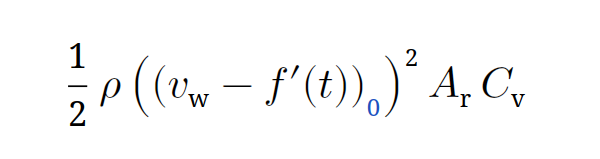
Now we can get the acceleration from this by dividing it with the mass of the rocket.
However since the velocity is squared to get the air resistance, we need to find the sign of the air resistance direction and multiply it to the force.
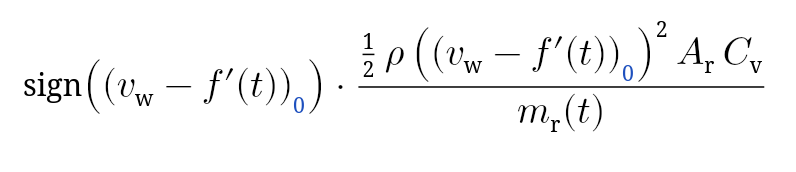
Like this. Now we can insert this into our solver block:
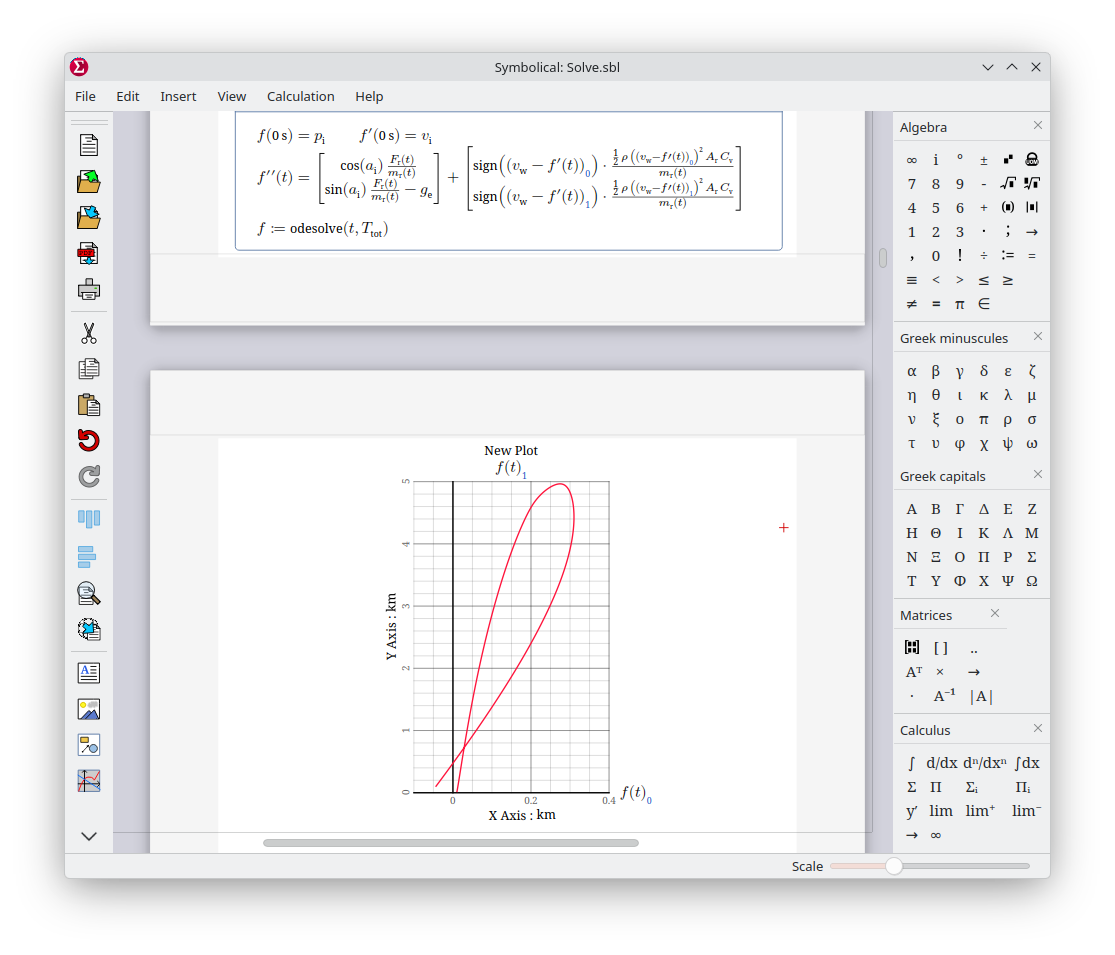
From this we can make some plots of the altitude and speed of the rocket:
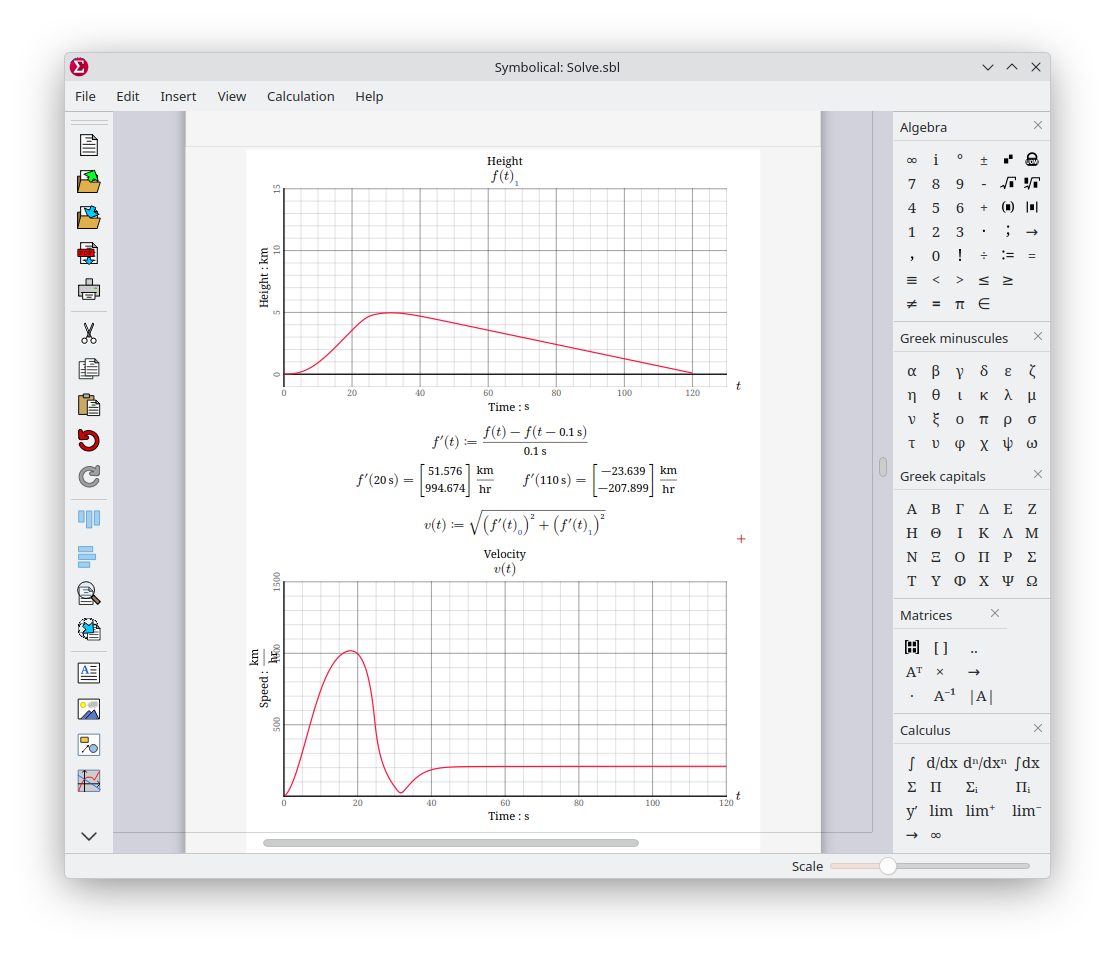
As can be seen from these plots, the rocket accelerates up to about 1000 km/hr and reaches its apogee at about 5 km after about 32 seconds, thereafter it starts descending with a speed that peaks at about 200km/hr.
This file can be downloaded here Solve.sbl